
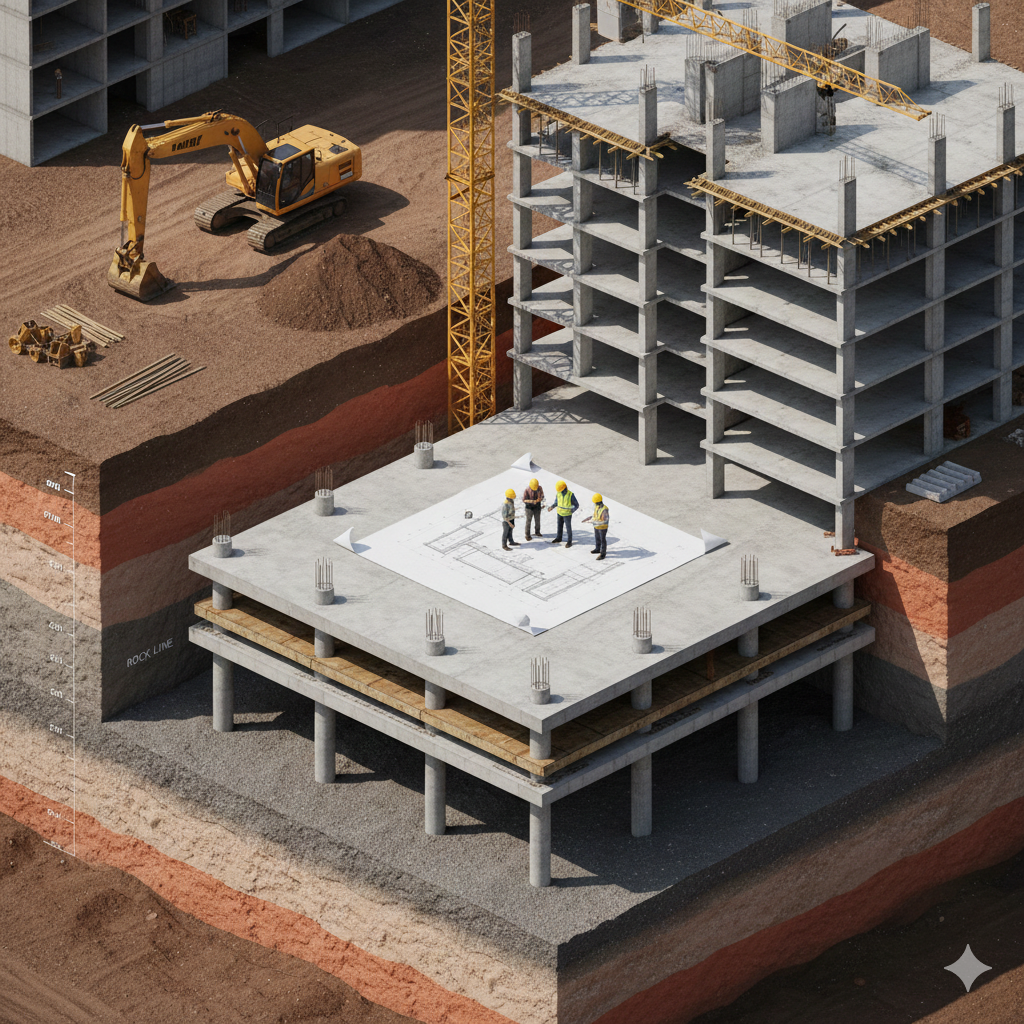
When it comes to constructing a safe and long-lasting building, the foundation is the most crucial element. It carries the entire load of the structure and transfers it safely to the ground. One common misconception among homeowners is that deeper foundations automatically make buildings stronger. In reality, foundation depth is a technical decision guided by engineering analysis, site conditions, and structural requirements. Engineers carefully evaluate several key factors before finalizing the appropriate foundation depth for any project.
Why Foundation Depth Matters
Foundation depth plays a critical role in preventing settlement, structural cracks, and long-term damage. A well-designed foundation ensures that the building remains stable under varying loads and environmental conditions. Choosing the wrong depth can lead to uneven settlement, moisture-related issues, or even structural failure over time.
1. Soil Type and Bearing Capacity
Soil conditions are the primary factor influencing foundation depth. Each type of soil behaves differently under load:
- Rocky or gravel soils provide high bearing capacity and often require shallower foundations.
- Clay soils expand and contract with moisture changes, requiring deeper or specially designed foundations.
- Sandy soils may shift under load and often need deeper foundations or soil stabilization techniques.
Engineers conduct soil tests to determine bearing capacity, settlement potential, and soil composition before deciding foundation depth.
2. Load and Height of the Structure
The total load of a building directly impacts foundation depth. This includes:
- Dead loads (weight of the structure)
- Live loads (people, furniture, equipment)
- Environmental loads (wind, seismic forces)
Multi-storey buildings exert higher loads and require foundations that extend to stronger soil layers, while single-storey homes may need comparatively shallower foundations.
3. Groundwater Level
Groundwater presence significantly affects foundation performance. High water tables can reduce soil strength and increase the risk of settlement or uplift pressure. Engineers study groundwater levels throughout the year to account for seasonal variations and design foundations that remain stable even under wet conditions.
4. Local Building Codes and Safety Regulations
Building codes specify minimum foundation depths based on regional soil conditions, climate, and seismic zones. These regulations ensure structural safety and must be followed for legal approvals. In earthquake-prone areas, deeper foundations or specialized foundation systems are often mandatory to improve resistance to seismic forces.
5. Type of Foundation System
The foundation system chosen also determines the depth:
- Shallow foundations (isolated footings, strip footings, raft foundations) are used when surface soil has adequate strength.
- Deep foundations (pile foundations, drilled shafts) are required when surface soil is weak or when loads must be transferred to deeper strata.
The selection depends on soil reports, building load, and site constraints.
6. Site and Environmental Conditions
Site-specific factors such as land slope, nearby buildings, and underground utilities influence foundation depth. Structures built on sloped land or close to existing buildings often require deeper foundations to ensure stability and prevent soil movement or differential settlement.
7. Long-Term Performance and Settlement Control
Foundation depth is not just about immediate strength but also long-term durability. Engineers aim to minimize differential settlement, which can cause cracks in walls, floors, and structural elements over time. Proper depth selection ensures uniform load distribution and reduces future maintenance issues.
8. Cost Efficiency and Practical Feasibility
While safety is the top priority, cost efficiency is also considered. Over-designing foundations can unnecessarily increase construction expenses. Engineers strike a balance between safety, durability, and cost by designing foundations that are technically sound and economically viable.
Closing from KB Raj Constructions
At KB Raj Constructions, foundation design is approached with precision and responsibility. We rely on detailed soil investigations, accurate structural calculations, and strict adherence to building codes to determine the right foundation depth for every project. Our focus on engineering integrity ensures that every structure we build stands strong, safe, and durable for generations to come.
